


When someone searches for help with anxiety and panic attacks, I usually imagine they are not asking out of curiosity. They may be tired of feeling on alert. They may be afraid of the next panic attack. They may be wondering why their body can suddenly feel out of control, even when there is no obvious danger. In my experience, people often begin looking into anxiety therapy after they have tried to manage it alone for a while and realize they need more support.
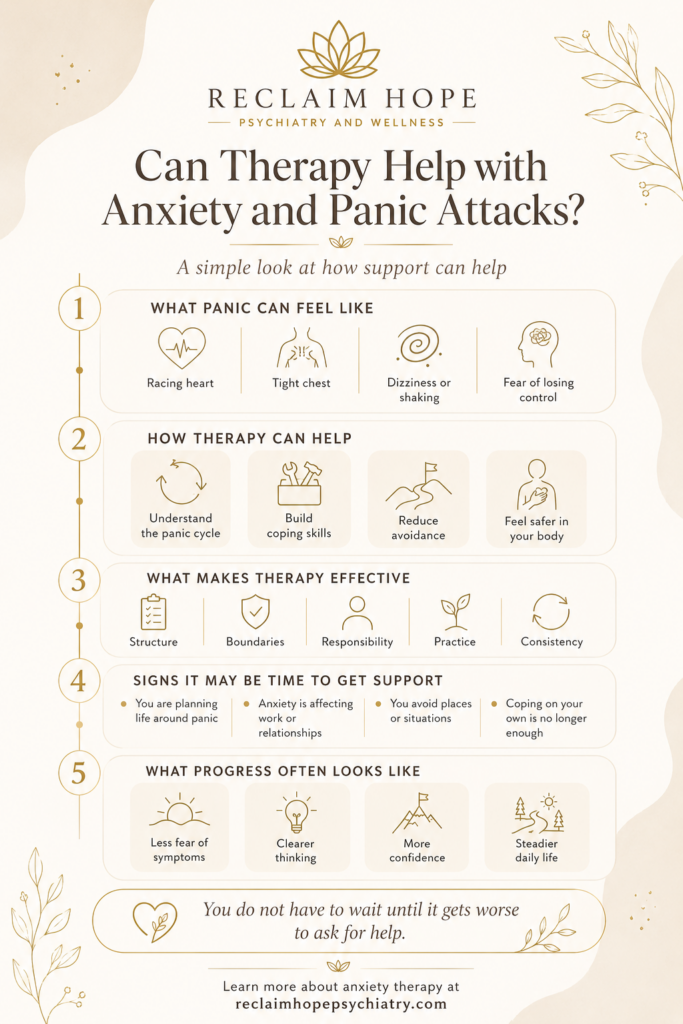
Anxiety and panic attacks can be confusing because they affect both the mind and the body. A person may understand logically that they are safe, but their body may still react with a racing heart, tight chest, shortness of breath, shaking, dizziness, nausea, or a strong urge to escape. That gap between what you know and what you feel can be very unsettling.
I have learned over time that many people feel embarrassed by panic. They may worry that others will not understand. They may avoid places where an attack has happened before. They may start planning their days around how to prevent the next one. Slowly, anxiety can begin to make life smaller.
Therapy can help with that. Not by promising that fear will disappear overnight, but by helping you understand what is happening, build practical skills, and begin responding to anxiety with more steadiness.
Understanding Anxiety and Panic Attacks
Anxiety and panic attacks are related, but they are not exactly the same thing. Anxiety often builds over time. It may include worry, tension, irritability, overthinking, difficulty sleeping, or a sense that something bad could happen. Panic attacks tend to feel more sudden and intense. They can come with strong physical symptoms and a fear that something is seriously wrong.
Some people can identify what triggers their panic. Others cannot. A panic attack may happen in a store, while driving, at work, during conflict, after a period of stress, or even while resting. This unpredictability can make people feel less safe in their own bodies.
In therapy, one of the first helpful steps is slowing down the fear around the symptoms. Panic can feel dangerous, but the symptoms themselves are part of the body’s alarm system. The alarm may be intense. It may be uncomfortable. But learning what is happening in the body can reduce some of the fear that keeps the cycle going.
That does not mean the experience is “all in your head.” It means your mind and body are interacting in a way that needs care, structure, and practice.
There Is No Single Best Method for Everyone
People sometimes ask what type of therapy is best for anxiety and panic attacks. I understand the question. When something feels disruptive, you want the clearest path forward.
There are several approaches that can help. Cognitive behavioral therapy can help people understand the relationship between thoughts, body sensations, and behaviors. It may also help reduce avoidance and build confidence through gradual practice. Psychodynamic therapy may help explore deeper emotional patterns, early experiences, fear of loss of control, or long-standing ways of managing stress. EMDR may be helpful when anxiety or panic connects to trauma or distressing experiences the body has not fully processed.
Some people also benefit from skills that focus on grounding, breathing, emotional regulation, and nervous system awareness. Others may need support with routines, boundaries, sleep, communication, or life transitions.
In my experience, the best therapy is not always about choosing one label. It is about understanding the person in front of me. What are the symptoms? What keeps them going? What has the person been carrying? What are they avoiding? What kind of support do they need to feel more stable and more capable?
Therapy should be individualized. Anxiety may have common patterns, but each person’s story is different.
How Therapy Helps with Anxiety and Panic Attacks
Therapy can help in several practical ways. It gives you a place to understand the panic cycle, learn how to respond differently, and slowly rebuild trust in yourself.
Therapy Helps You Understand the Panic Cycle
Panic attacks often become more frightening because people begin to fear the symptoms themselves. A person may notice their heart beating faster and think, “Something is wrong.” That thought increases fear, which can make the heart beat even faster. The body reacts, the mind interprets, and the cycle grows.
In therapy, we work on identifying that cycle. Not in a cold or clinical way, but in a grounded way. When you understand the pattern, it can feel less mysterious. You can begin to notice the difference between danger and discomfort.
That distinction matters. Panic feels threatening, but it is not always a sign that you are unsafe.
Therapy Supports Better Coping Skills
Many people try to cope with panic by avoiding anything that might trigger it. This makes sense. Nobody wants to feel trapped in those symptoms. But avoidance can slowly train the brain to believe that certain places, conversations, or sensations are dangerous.
Therapy can help you build coping skills that make it possible to face life more gradually and safely. These may include grounding exercises, breath awareness, realistic self-talk, body-based regulation skills, and practical plans for moments when anxiety rises.
The goal is not to force yourself through panic. The goal is to build capacity.
Therapy Helps Reduce Avoidance
Avoidance is one of the biggest ways anxiety grows. A person may stop driving on highways, avoid crowded stores, cancel social plans, or avoid being alone. At first, avoidance brings relief. Over time, it can reinforce the fear.
In therapy, reducing avoidance is done carefully. It should not feel reckless. It should be paced. We look at what you are avoiding, why it feels threatening, and what small steps can help you regain confidence.
Small steps matter. Progress may begin with staying in a situation a little longer than usual, making a phone call you have been delaying, or practicing a coping skill instead of immediately escaping.
These moments may seem simple from the outside. They are not simple when anxiety has been running the pattern.
Therapy Builds Trust in Your Body
Panic attacks can make people feel betrayed by their own bodies. I often hear people say, “I don’t trust myself anymore,” or “I’m scared it will happen again.” That fear is understandable.
Part of therapy is learning that body sensations can be uncomfortable without being dangerous. A racing heart, a tight chest, or lightheadedness may need attention and care, but they do not always mean something catastrophic is happening.
As people practice, they often begin to feel less afraid of the first signs of anxiety. They may still feel discomfort, but they no longer respond with the same level of fear. That shift can reduce the intensity of the cycle.
The Role of Structure, Boundaries, and Responsibility
Therapy for anxiety and panic attacks is not only about what happens during a panic attack. It is also about the way a person lives around anxiety.
Structure
Anxiety often grows when life feels unstructured or overloaded. Therapy can help bring structure to the work. We can identify patterns, triggers, routines, and responses. We can decide what to focus on first instead of trying to solve everything at once.
Structure can also help people feel less alone with the process. There is a place to return to each week, a place to review what happened, and a place to keep practicing.
Boundaries
Boundaries often become part of anxiety work. Some people with anxiety feel responsible for keeping everything together. They may overcommit, avoid disappointing others, or ignore their own limits until their body becomes overwhelmed.
In therapy, boundaries are treated as a skill. You can learn to pause before agreeing. You can communicate needs more clearly. You can practice letting others have their own reactions without taking full responsibility for them.
This can be difficult work. It is also important work.
Responsibility
Responsibility does not mean blaming yourself for anxiety or panic attacks. It means learning where you have choices.
You may not choose the first wave of panic. But over time, you can learn how to respond to it. You can learn what patterns feed anxiety and what patterns help reduce it. You can practice coping skills, reduce avoidance, and become more honest about stress, rest, and emotional needs.
That kind of responsibility can feel empowering when it is handled with compassion.
When Individual Therapy May Be Helpful
For many people, individual therapy is a steady place to work on anxiety and panic attacks because it allows the process to be personal. Panic symptoms may be similar from person to person, but the meaning underneath them can vary.
One person may have panic related to performance pressure. Another may have panic connected to trauma-informed care needs. Another may feel panic during conflict, illness worries, parenting stress, or major life transitions. Some people have been anxious for so long that they are not sure what life would feel like without constant tension.
Therapy gives space to look at all of that. It also helps connect insight to action. Understanding why anxiety exists is helpful, but practicing new responses is what often changes daily life.
In my experience, the work becomes most effective when a person can be honest about what is happening and willing to practice between sessions. Not perfectly. Just consistently.
What Progress Often Looks Like
Progress with anxiety and panic attacks is often subtle at first. A person may notice the early signs of panic and use a grounding skill before the symptoms build. They may stay in a situation instead of leaving immediately. They may stop checking their body every few minutes. They may sleep a little better. They may feel less controlled by the fear of the next attack.
Sometimes progress looks like having a panic attack and recovering from it with less fear than before. That still counts.
I often remind people that the goal is not to never feel anxious again. Anxiety is part of being human. The goal is to reduce how much anxiety controls your choices, your relationships, and your sense of safety.
As therapy begins to work, people may feel more agency in daily life. They may communicate more clearly, set healthier boundaries, and trust themselves more. They may begin to see panic as something they can respond to rather than something that defines them.
That is meaningful change.
Accountability and Long-Term Maintenance
Anxiety and panic attacks can improve, but maintenance matters. Stressful seasons can bring old patterns back. A person may start avoiding again, overworking again, or ignoring their needs until symptoms rise.
Therapy can help you stay accountable to your own care. It gives you a place to notice when old habits return and adjust before they become overwhelming again.
This is not about quick symptom relief only. It is about long-term resilience. It is about learning how to return to steadiness, even when life is uncertain.
I have seen people become more confident not because they never feel anxious, but because they know how to care for themselves when anxiety appears. They have tools. They have language. They have boundaries. They have a better understanding of their own patterns.
That kind of growth takes time, but it can change how a person moves through life.
Taking the Next Step with Support
If you are dealing with anxiety and panic attacks, it makes sense to want relief. It also makes sense if part of you feels unsure about starting therapy. Many people wait because they think they should be able to manage it alone, or because they worry their symptoms are not “serious enough.”
You do not have to wait until anxiety controls every part of your life before reaching out.
At Reclaim Hope Psychiatry and Wellness, anxiety therapy is approached with care, structure, and respect for the pace of real change. If anxiety and panic attacks have been affecting your daily life, your relationships, or your sense of safety in your own body, you can contact Reclaim Hope Psychiatry and Wellness to begin the conversation.